
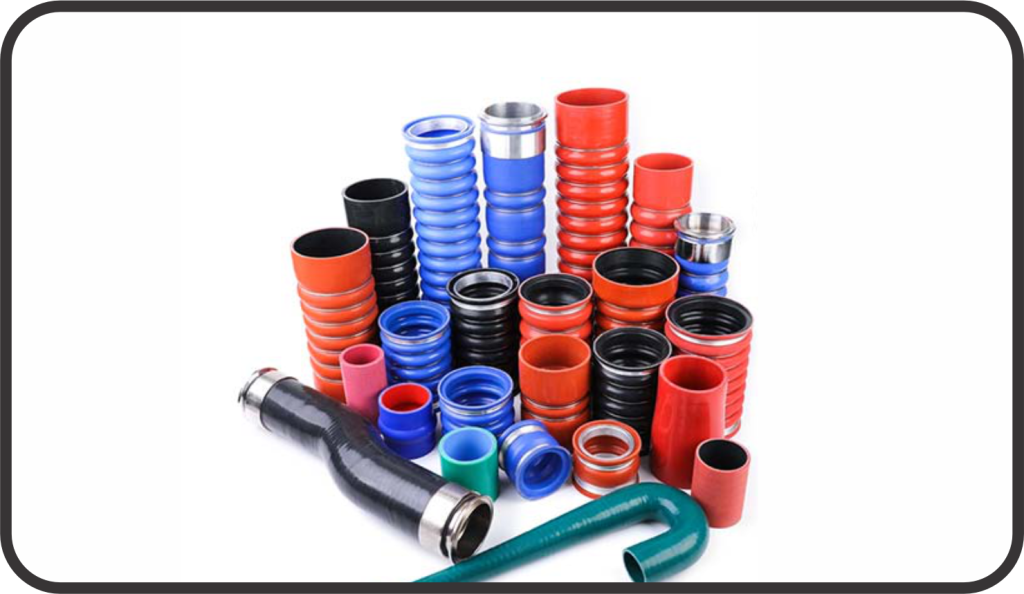
Silicone hoses are versatile, durable, and widely used in various industries for fluid transfer applications. Here are the key details about silicone hoses:
Composition:
Silicone Rubber: Silicone hoses are primarily made of silicone rubber, which is a synthetic polymer composed of silicon, carbon, hydrogen, and oxygen atoms. This material is known for its flexibility, heat resistance, and durability.
Features:
Flexibility: Silicone hoses are highly flexible, allowing them to bend and adapt to different installation requirements without kinking or collapsing.
Temperature Resistance: They can withstand extreme temperatures, typically ranging from -50°C to 200°C (-58°F to 392°F), making them suitable for both high and low-temperature applications.
Chemical Resistance: Silicone hoses are resistant to a wide range of chemicals, including acids, alkalis, solvents, and oils.
Non-Toxic: Silicone rubber is non-toxic and doesn’t leach harmful substances, making it safe for use in food and medical applications.
UV and Ozone Resistance: Silicone hoses exhibit good resistance to ultraviolet (UV) radiation and ozone, ensuring long-term performance even in outdoor applications.
Electrical Insulation: Silicone rubber has excellent electrical insulation properties, making silicone hoses suitable for electrical insulation applications.
Applications:
Automotive: Silicone hoses are commonly used in automotive applications for coolant systems, turbocharger systems, and air intake systems due to their heat resistance and flexibility.
Medical: They are used in medical devices and equipment for fluid transfer and as tubing for various applications due to their biocompatibility and non-toxic nature.
Food and Beverage: Silicone hoses are utilized in food and beverage processing industries for transferring liquids and gases due to their food-grade certification and resistance to microbial growth.
Industrial: In industrial settings, silicone hoses are employed for conveying fluids, air, and gases in various processes where resistance to high temperatures, chemicals, and abrasion is required.
Pharmaceutical: Silicone hoses find applications in pharmaceutical manufacturing for transferring fluids and gases in critical processes due to their purity, cleanliness, and resistance to sterilization methods.
Maintenance:
Cleaning: Silicone hoses can be cleaned easily with mild soap and water. They are also compatible with various cleaning agents.
Inspection: Regular inspection for signs of wear, damage, or degradation is essential to ensure the continued performance and integrity of silicone hoses.
Storage: Silicone hoses should be stored in a cool, dry place away from direct sunlight and sources of ozone to prevent premature aging and degradation.
In summary, silicone hoses offer a combination of flexibility, temperature resistance, chemical resistance, and durability, making them suitable for a wide range of applications across industries.